May God reward you for your generosity!

May God reward ouR
MAJOR benefactors
Learn more about the building project benefactors and how you can support the project with a pledge.

HELP THE SISTERS SPREAD THE WORD
Download the Sisters’ brochure to print and distribute among friends, family and your local community.
Alternatively, you can contact the Sisters to request printed brochures.
“Unless the Lord build the house, they labour in vain that build it.”
About the project
-
Every Carmel is Our Lady’s house. It is called to be a Paradise on earth, because wherever God dwells, there is Heaven.
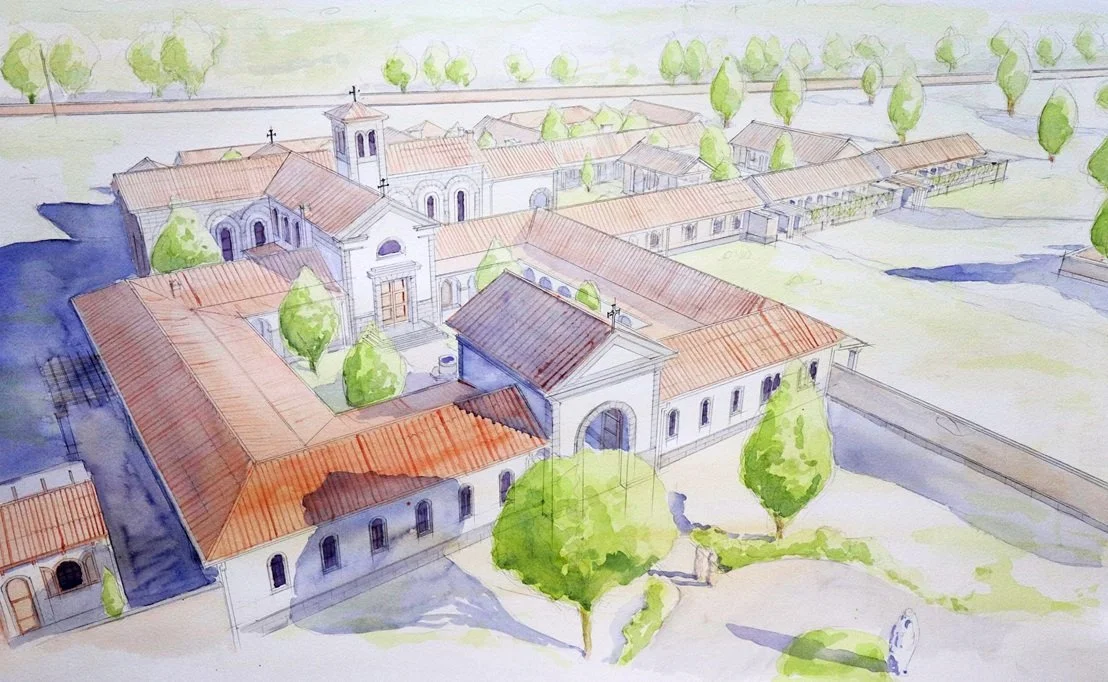
Since the arrival of the founding Sisters at their rural home in Mathoura in 2019, they have made use of the existing small farmhouse and several demountables as a temporary monastery. As more young women come to imitate Our Lord in a poor, simple and joyful life, the need for a more suitable monastery building has become evident.
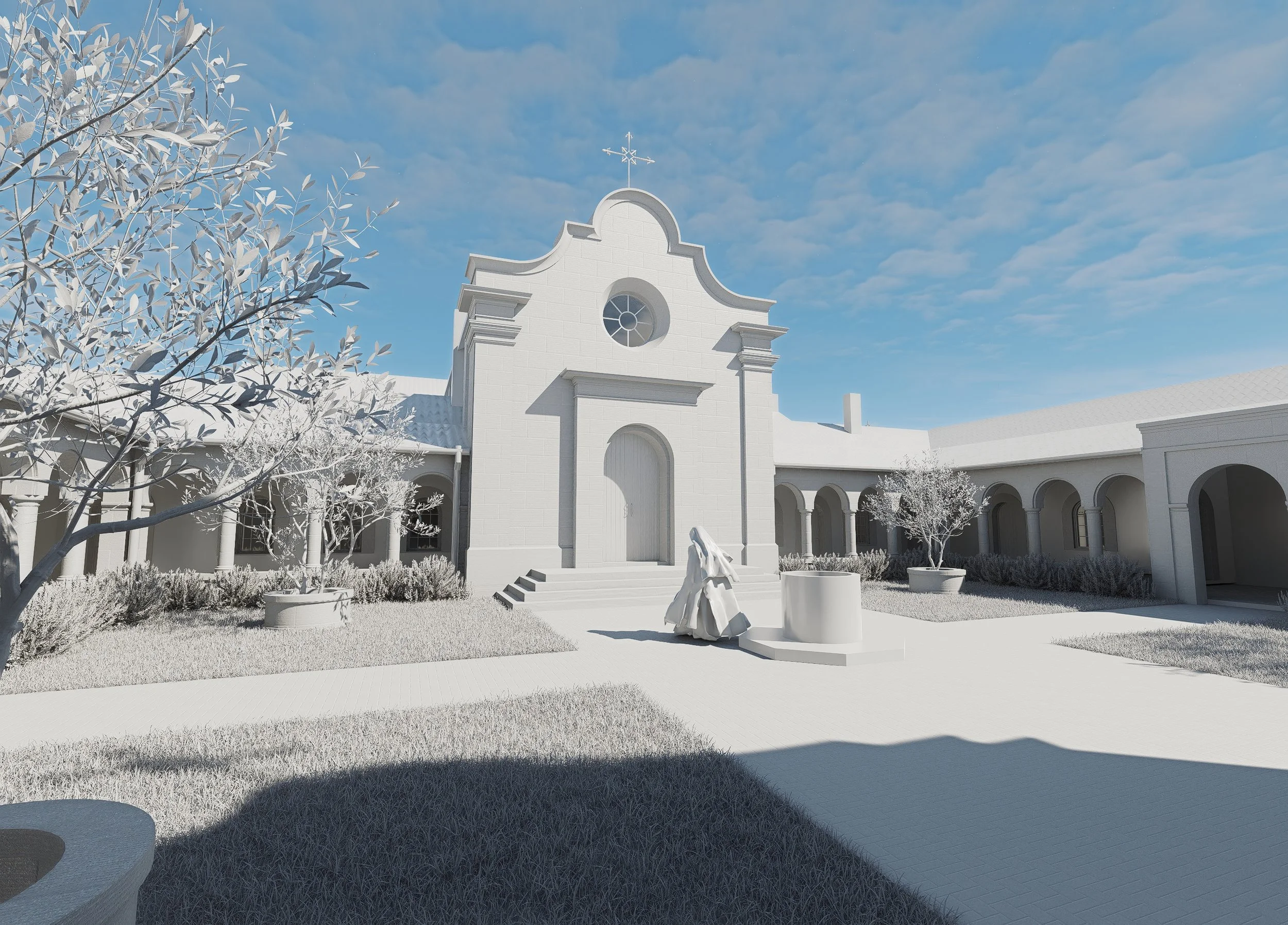
Built with durable and sustainable materials, the new monastery will not only better reflect the contemplative life of the Sisters, but will stand in witness for centuries to come as a tangible sign of God’s enduring presence among His children.
-
SIMPLICITY & SUSTAINABILITY
The contemplative life of a Carmelite calls her to an ever deeper following of Christ’s example of poverty and simplicity. Thus, the monastery in Mathoura will be a simple structure that supports the austere lifestyle of manual labour embraced by the Sisters, in union with the poor of the world. Its wood stoves and thick, heat resistant walls will render mechanical heating and cooling systems unnecessary.The monastery will be primarily constructed from timeless, natural, local materials, such as heavy timbers, stone and clay, avoiding the use of steel, concrete and acrylics.
STONE CHAPEL
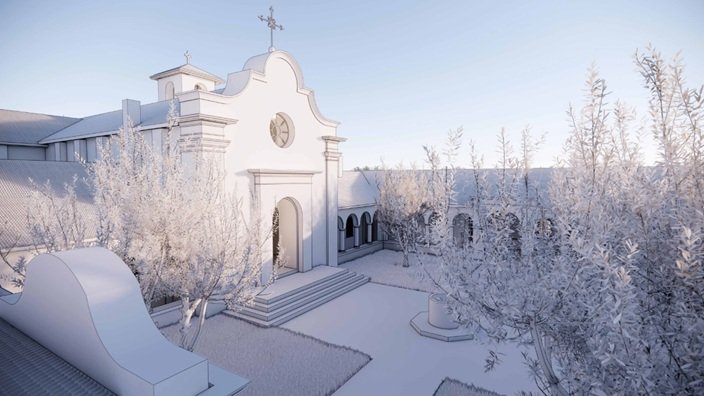
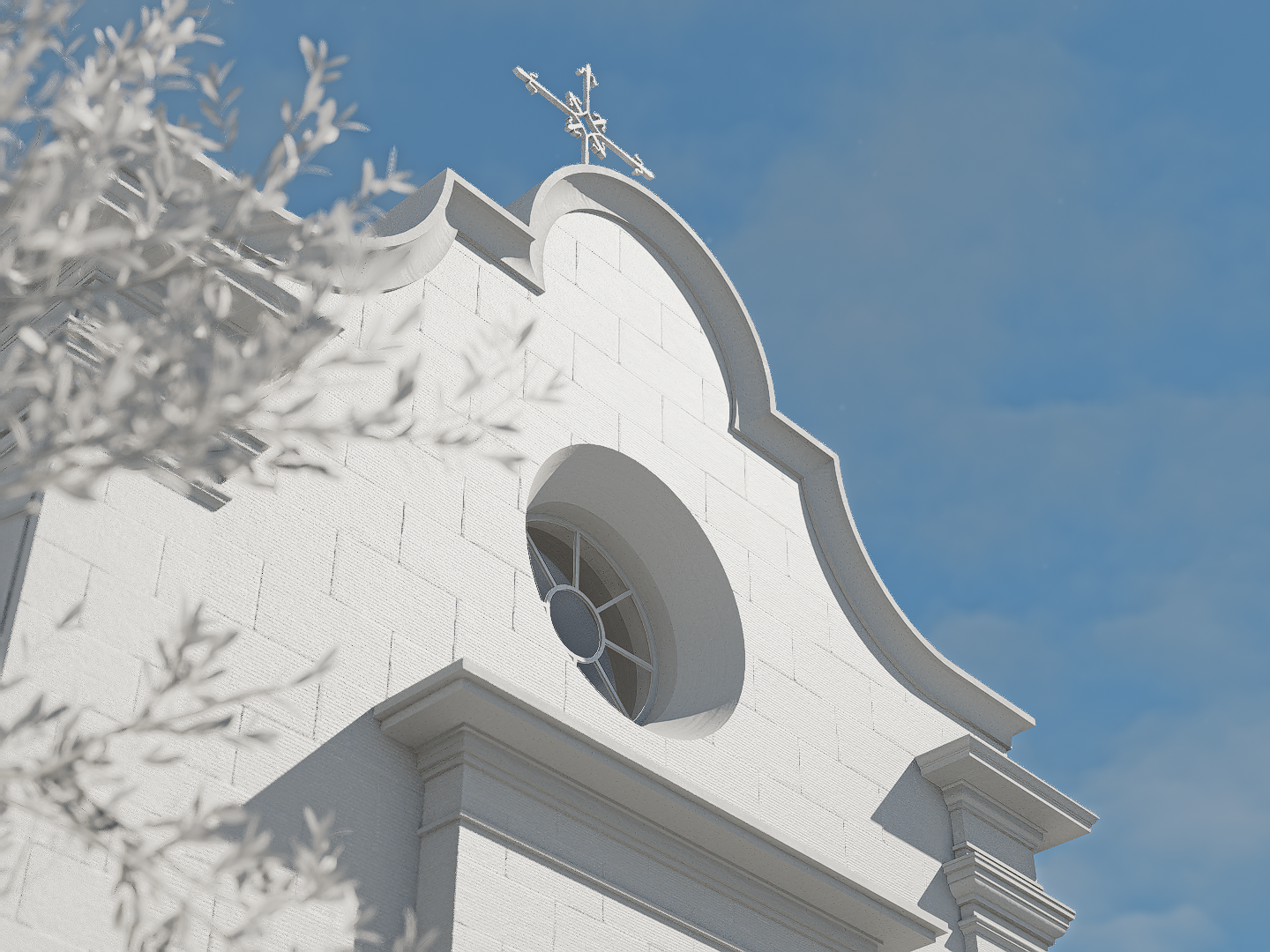
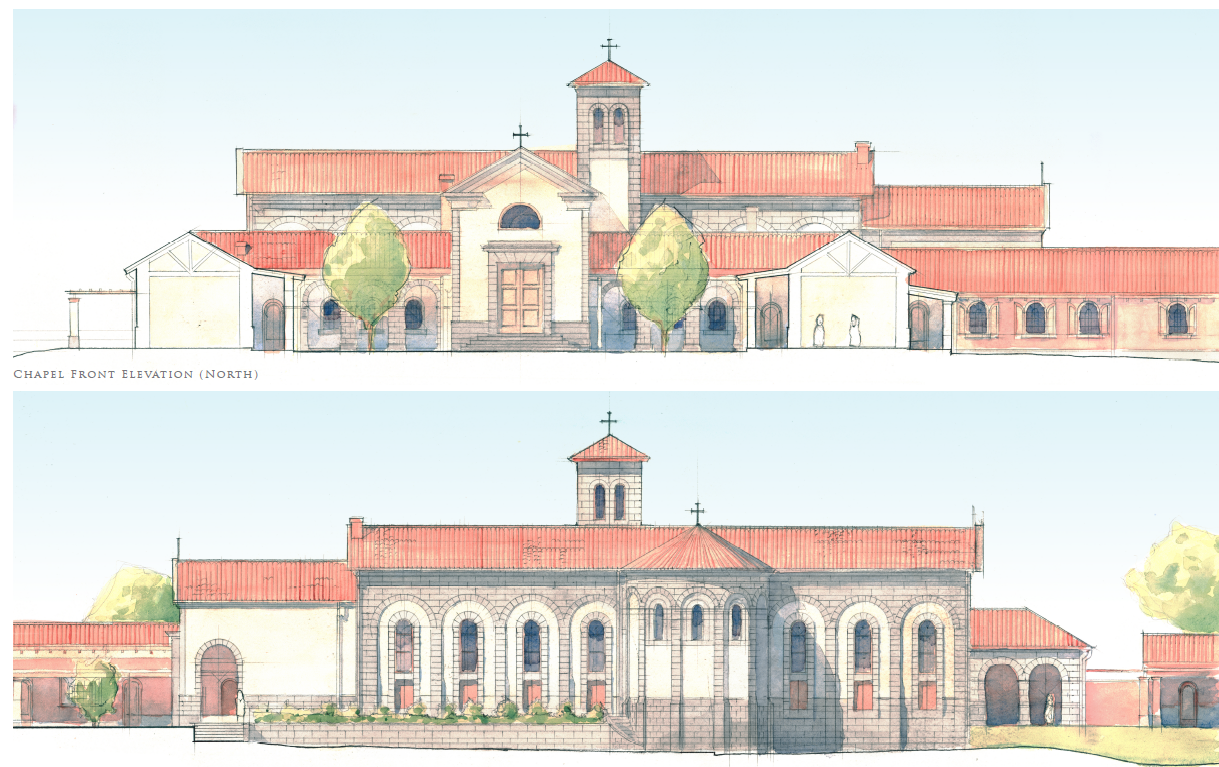
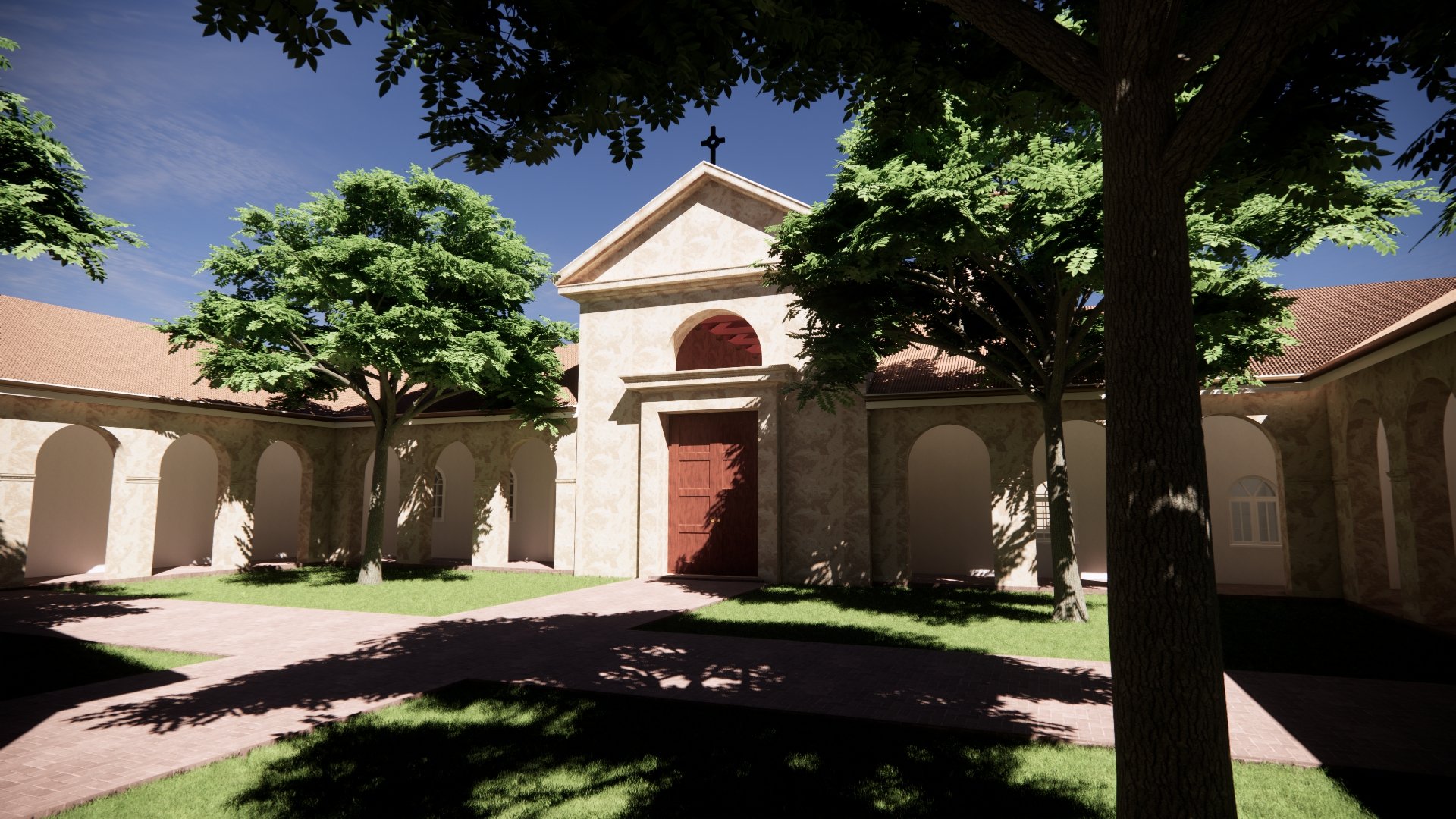
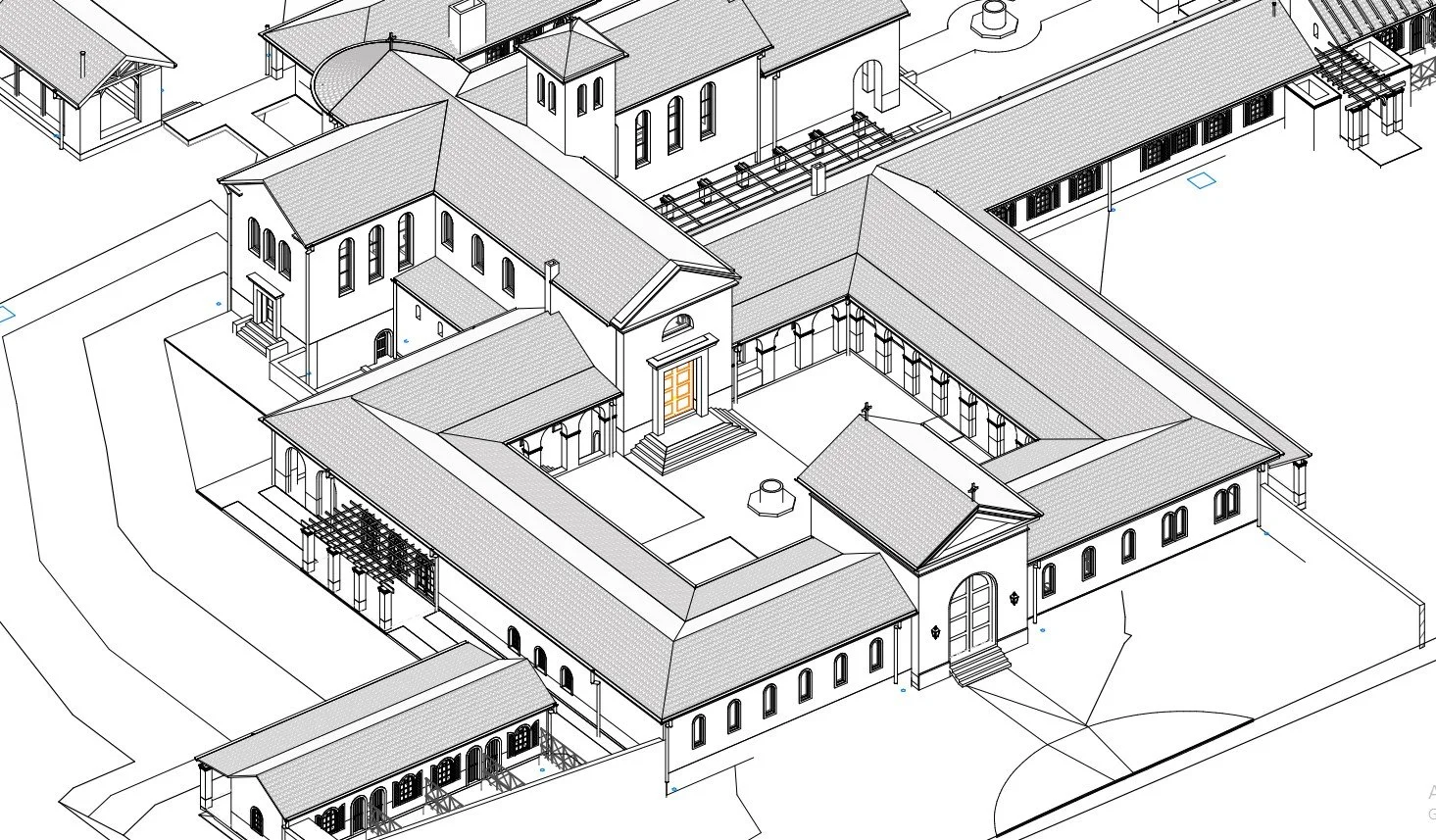
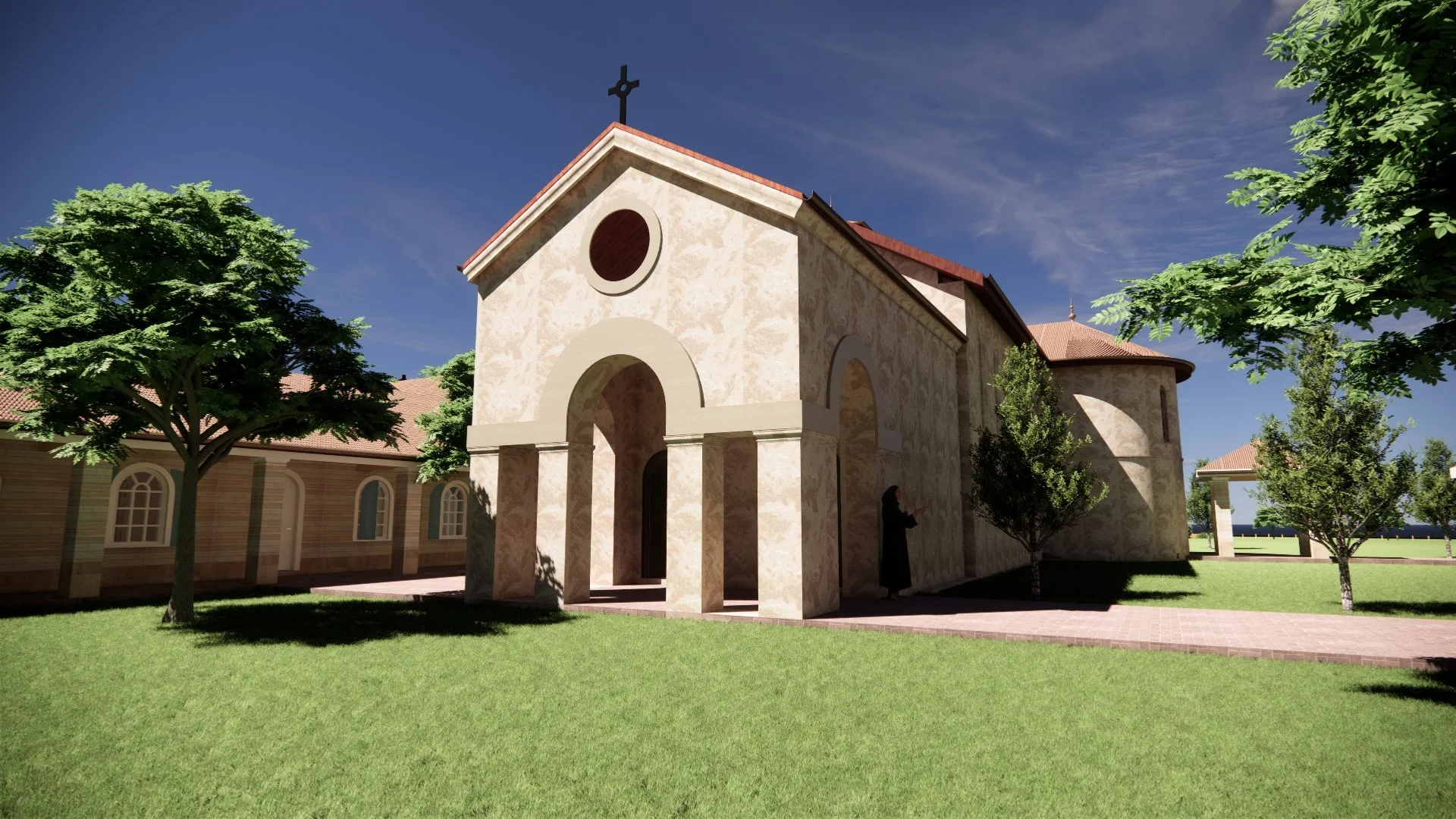
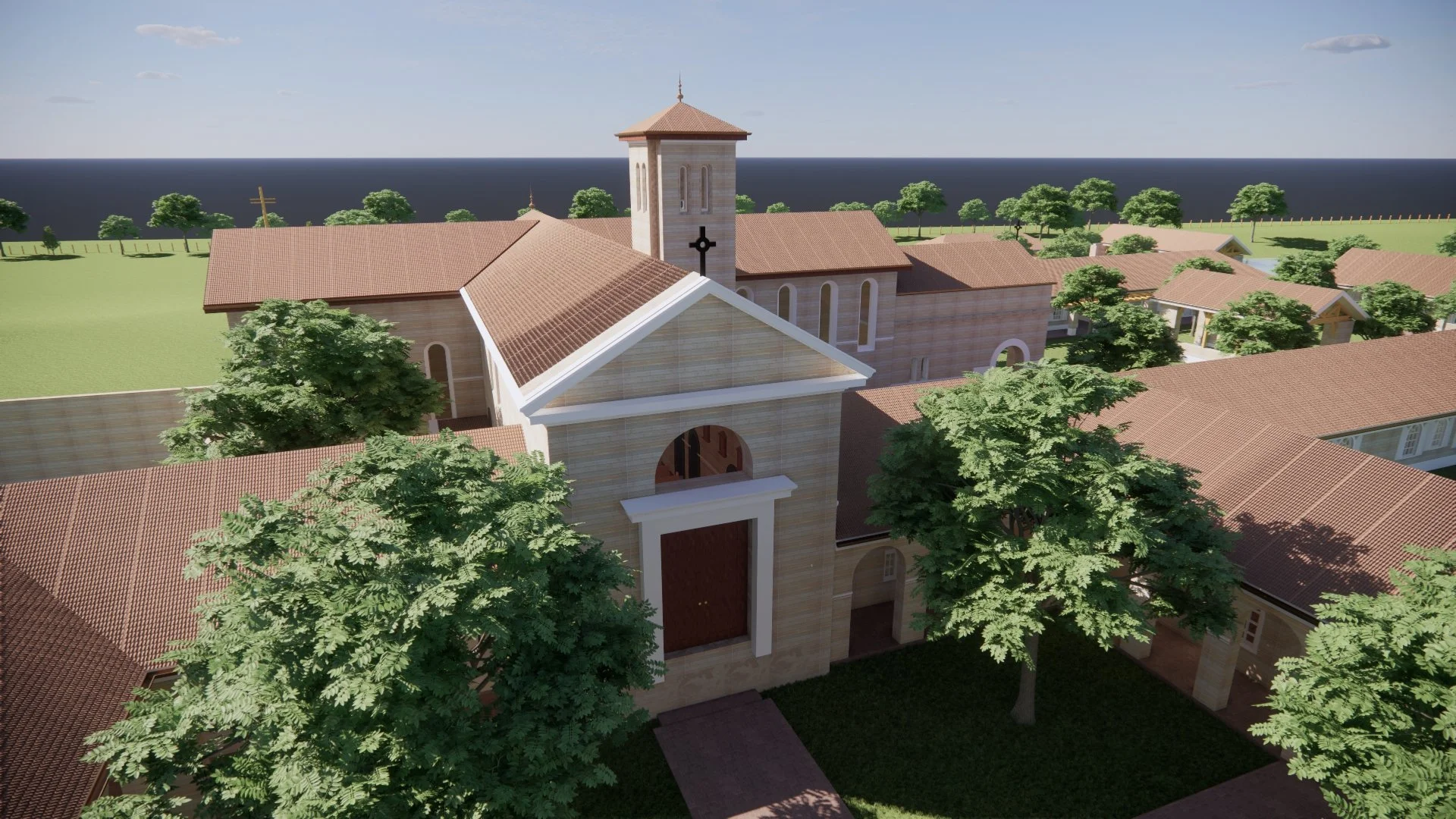
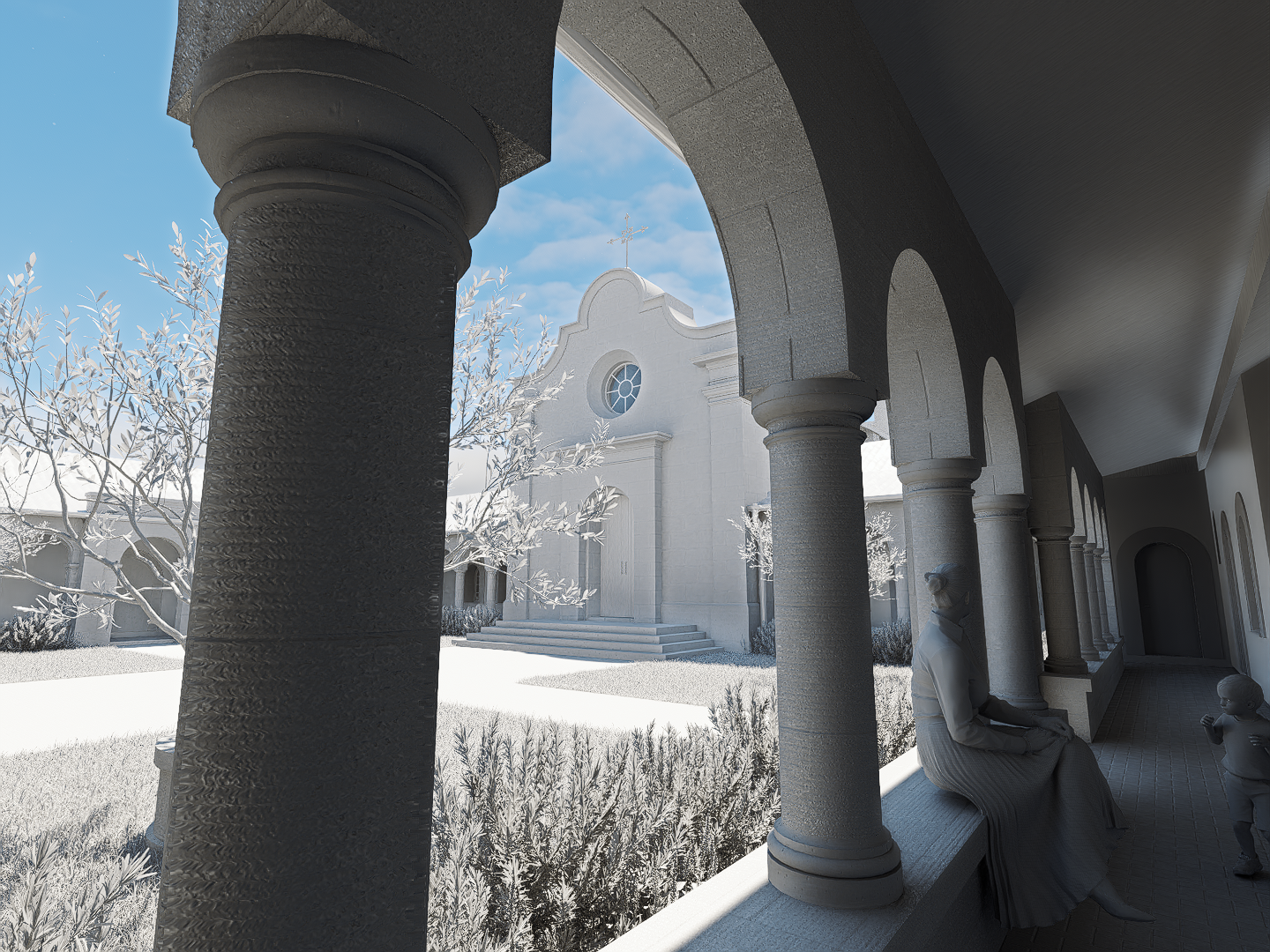
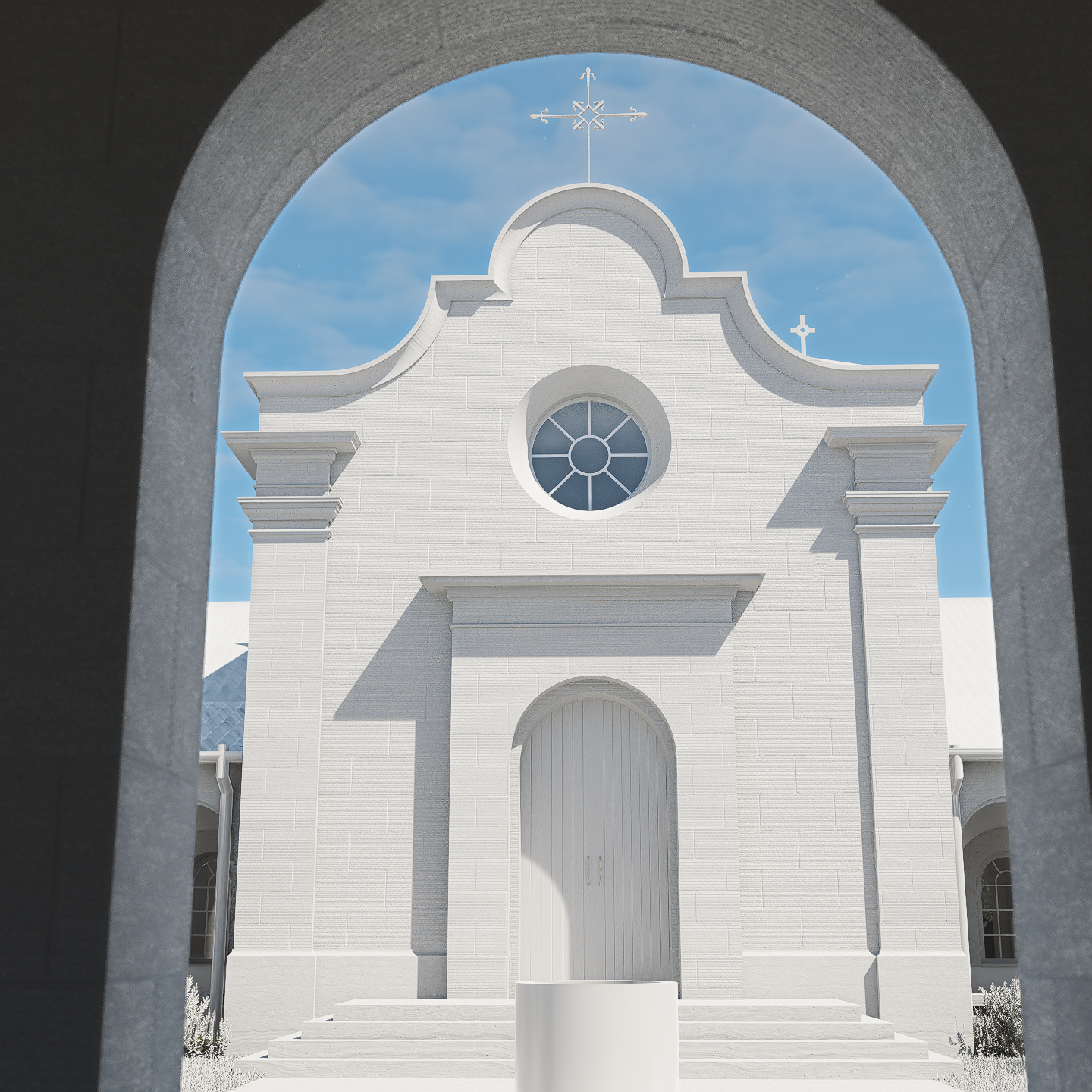
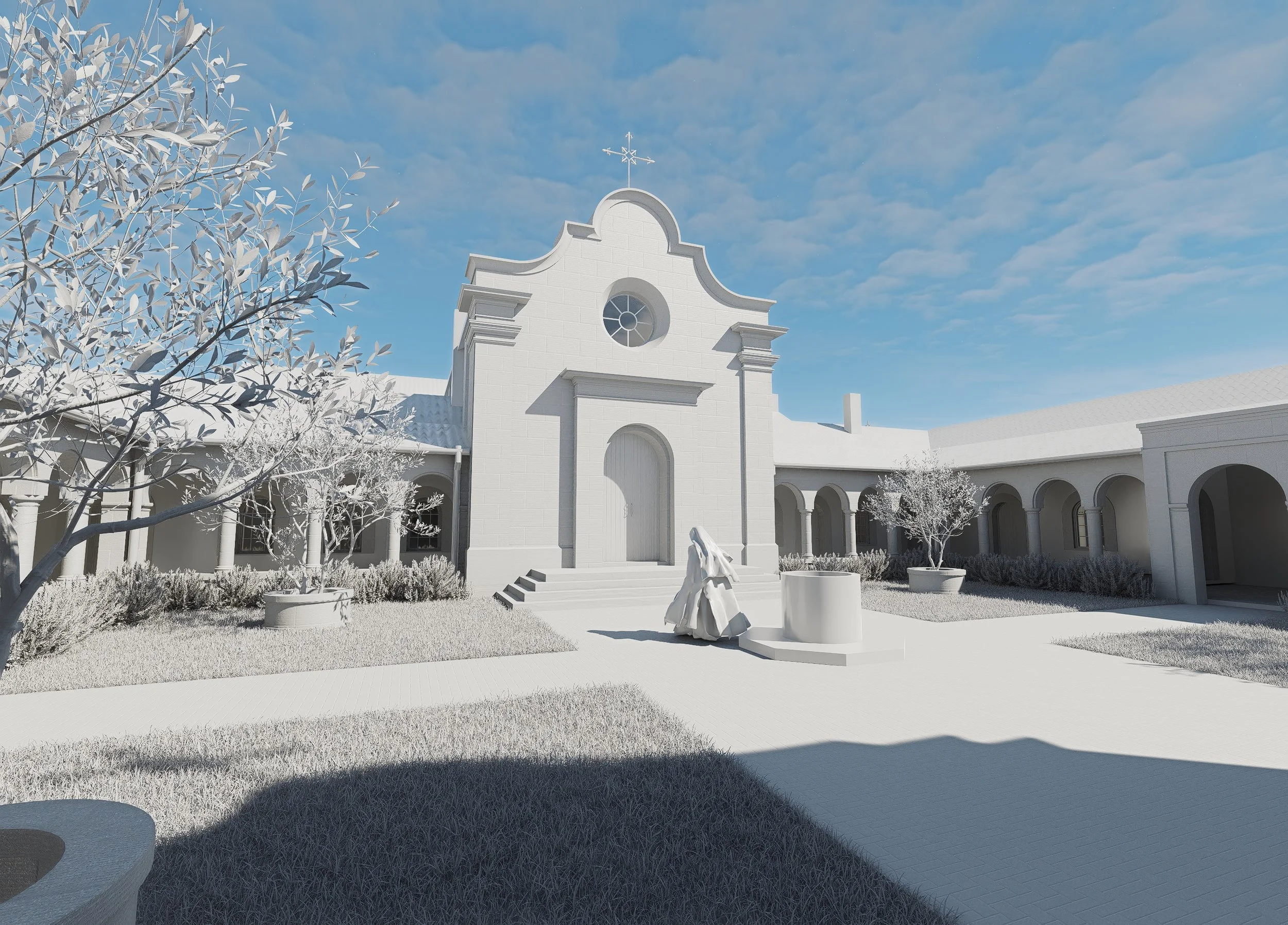
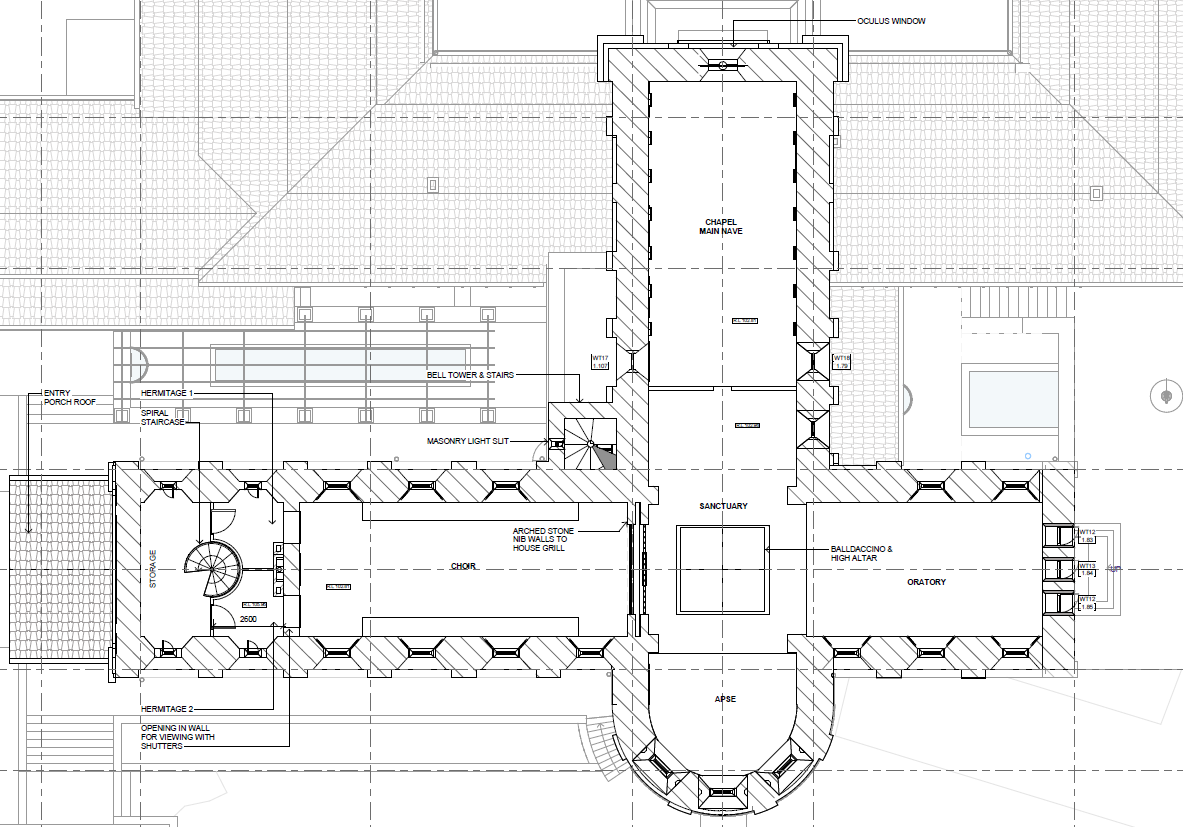
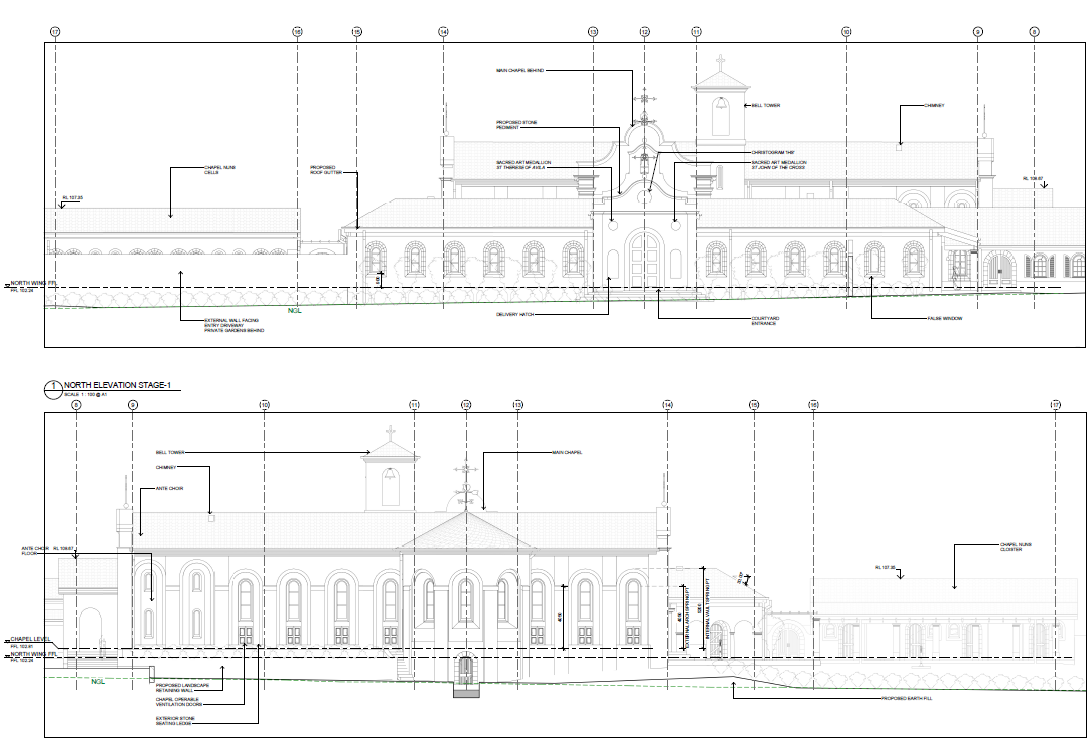
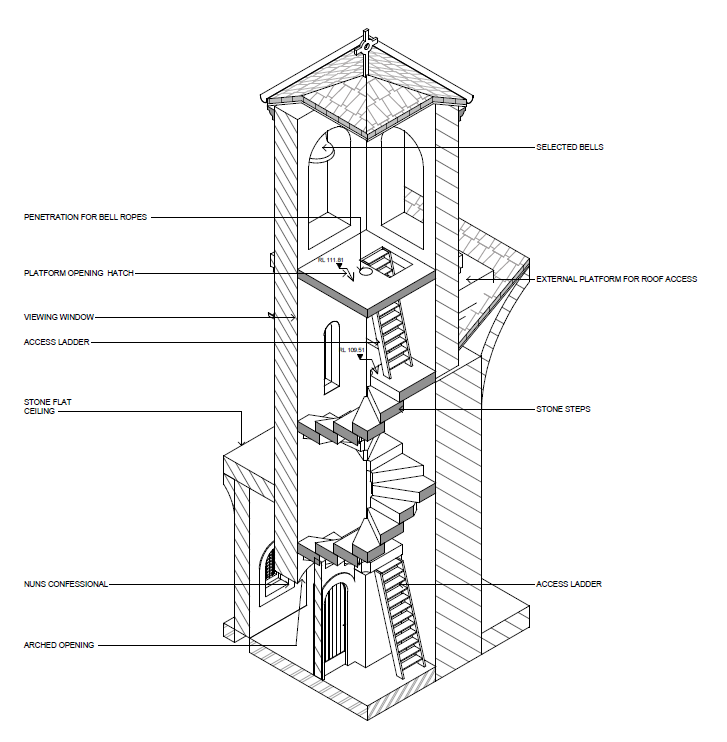
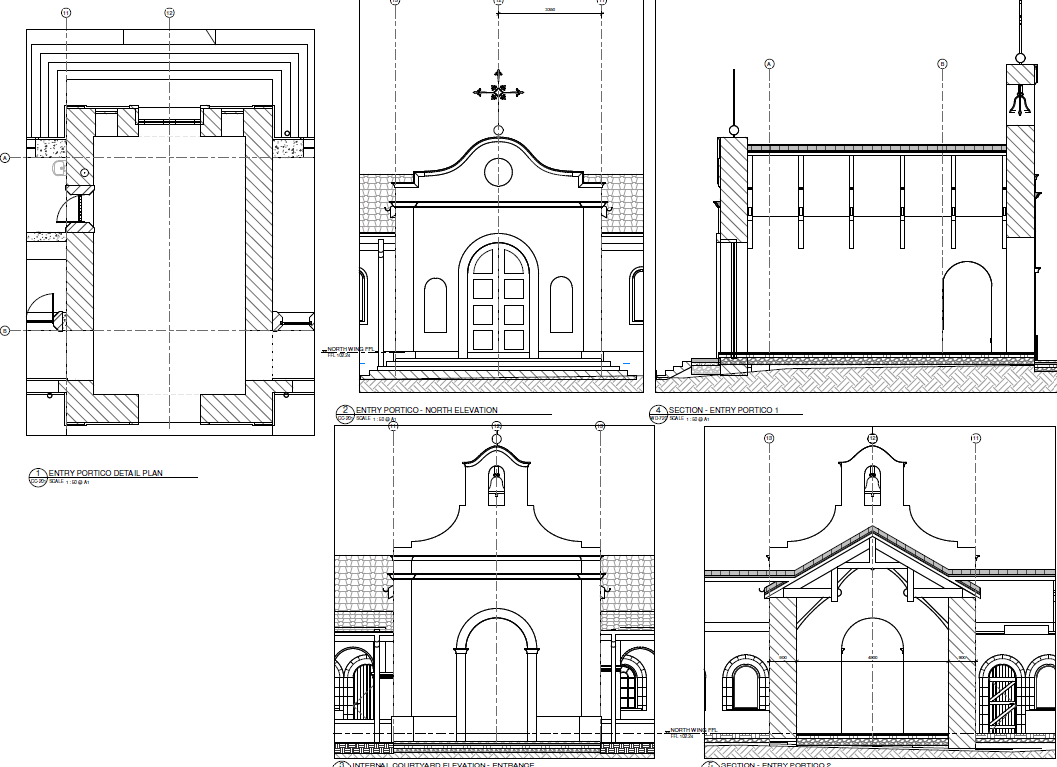
Named in honour of the Prophet Elijah, the Chapel will be the heart of the monastery. The Sisters spend much of their time in the Chapel, gathering daily for Holy Mass, the Divine Office and two hours of silent prayer. Therefore, the Chapel has been designed as a place of peace and recollection, not only for the Sisters but for their visitors.The Chapel will be the major focus of the first stage of construction. In addition to the Sisters’ Choir areas and an apse serving as an oratory, the Chapel will feature an underground space, or Crypt, for heat resilient storage of sacristy items, as well as a nave seating about 50 guests, with overflow to the courtyard for the Sisters’ occasional larger celebrations. There will also be a tall tower for the Sisters’ bells. Various rooms vital to the functioning of the monastic life, such as the sacristies, the turn room and speakrooms (where the Sisters meet with their family and friends from behind the traditional Carmelite grates) will be contained in the wings surrounding the courtyard.
Beautiful and sustainable, the stone walls and vaulting will provide deeply devotional acoustics, echoing the chanting of the Psalms as the Sisters come together many times a day to pray the Divine Office.
RAMMED-EARTH DESIGN
With the exception of the high walls of the stone Chapel, all the other rooms of the monastery will be constructed using rammed-earth.This ancient technique uses a mixture of natural soil materials, compressed in formwork, and it has been favoured throughout history in arid climates for its outstanding capacity to alleviate extreme temperature changes and naturally regulate humidity. The majority of the floors will also be made from a traditional compacted earth system.
In God’s Providence, the soil from the Sisters’ own monastery grounds will be used in the rammed-earth process.
-
Although the Sisters’ new home is comparatively small and simple, the construction will occur in stages due to the limitations of the Sisters’ budget, in addition to the careful research and involved certification required to build using historic methods.
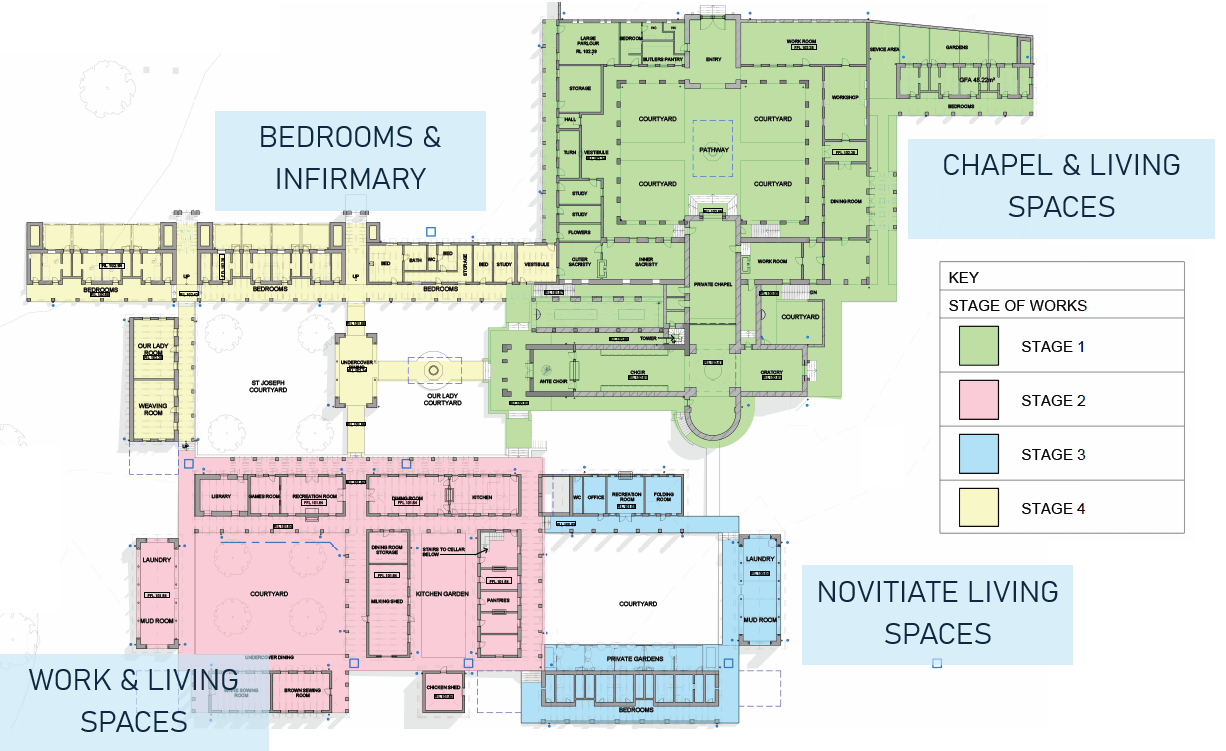
STAGE 1: CHAPEL & CHAPEL NUN QUARTERS
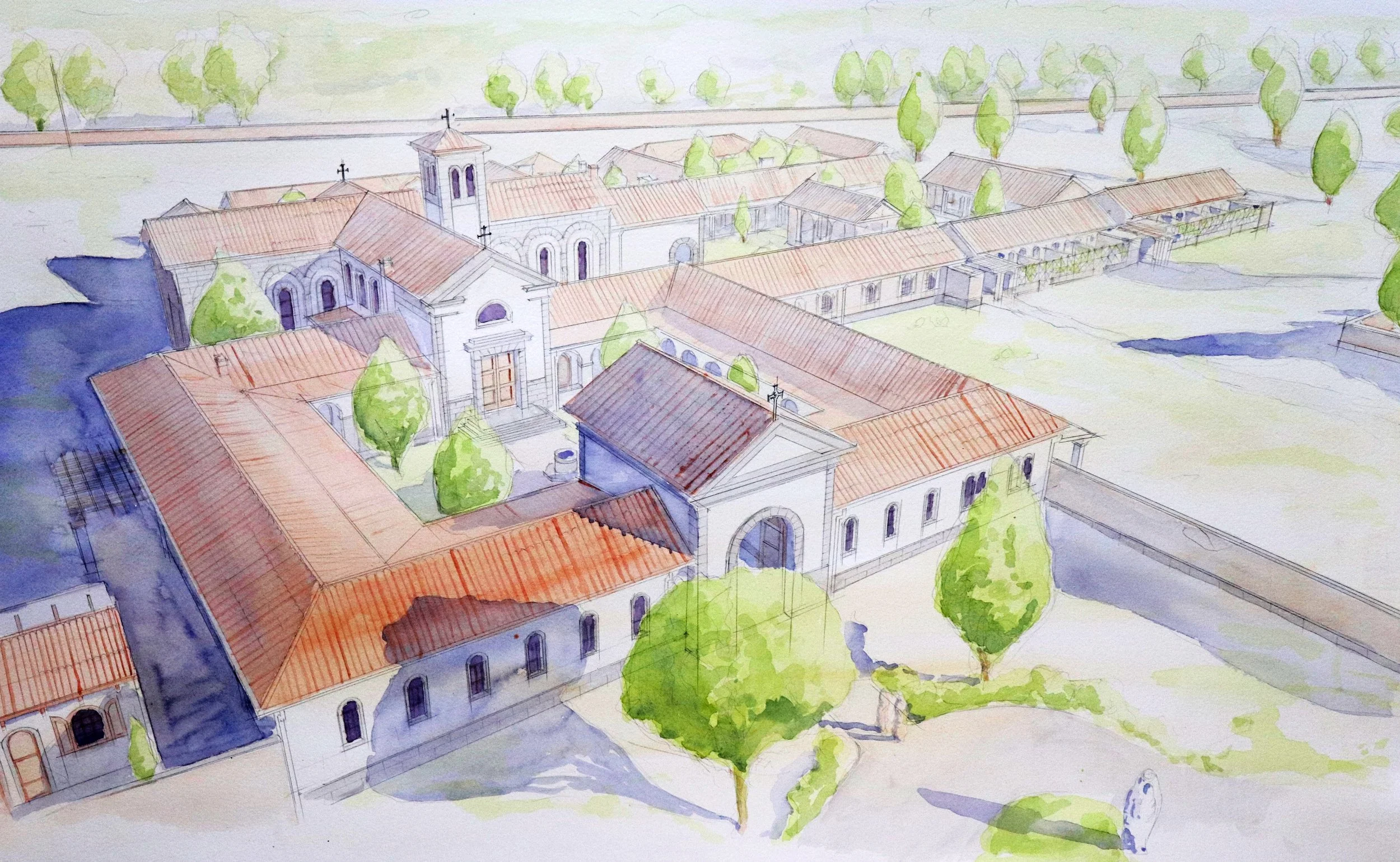
The first building stage consists of the Chapel, the focal point of the monastery and the Sisters’ daily lives. Stage 1 will also include several wings surrounding the Chapel, including the turn and speakrooms as well as one wing of cells (the Sisters’ bedrooms) and living spaces, with their accompanying gardens.
Additionally, Stage 1 will see the beginning of the traditional monastic boundary wall, also built from rammed earth.
STAGE 2: WORK AND LIVING SPACES
Stage 2 will involve the construction of several important living spaces, including the dining-room (refectory), recreation room, laundry areas, kitchen, sewing rooms and underground food storage. Because the nuns maintain their spirit of silent prayer as they work throughout the day, the living spaces of a monastery are deeply sacred places.
STAGE 3: NOVITIATE LIVING SPACES
Comprised of bedrooms, workrooms, and gardens, this section of the monastery will provide prayerful living spaces for the young members of the community during their years of formation.
STAGE 4: BEDROOMS & INFIRMARY
The last stage of the monastery will involve the construction of the remaining bedrooms for the nuns, known as cells.
Monasteries typically contain a few larger, more comfortable bedrooms for the sick and elderly, known as the infirmary cells.
Stage 4 also involves several small rooms that will be used for sewing and weaving, an important part of the Sisters’ daily life as they spin and weave their own clothes.
-
The Sisters received consent for the Development Application for their new residence from their local council in October of 2024, and since then have been working on Construction Certification with their project team, which is due to be submitted within the next few months.
Once this Certification is submitted and approved, construction will begin this year with Stage 1: Chapel & Chapel Nun Quarters.
“Thou hast commanded me to build a temple on thy holy mount, and an altar in the city of thy dwelling place, a resemblance of the holy tabernacle, which thou hast prepared from the beginning.”
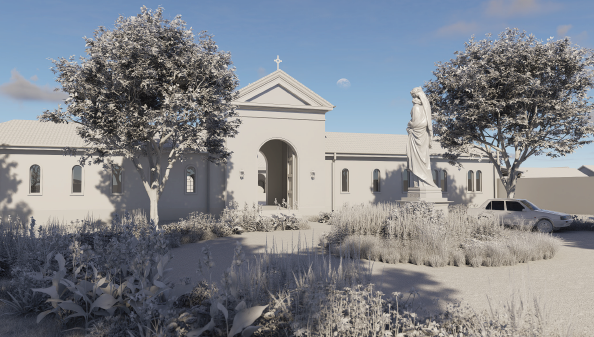
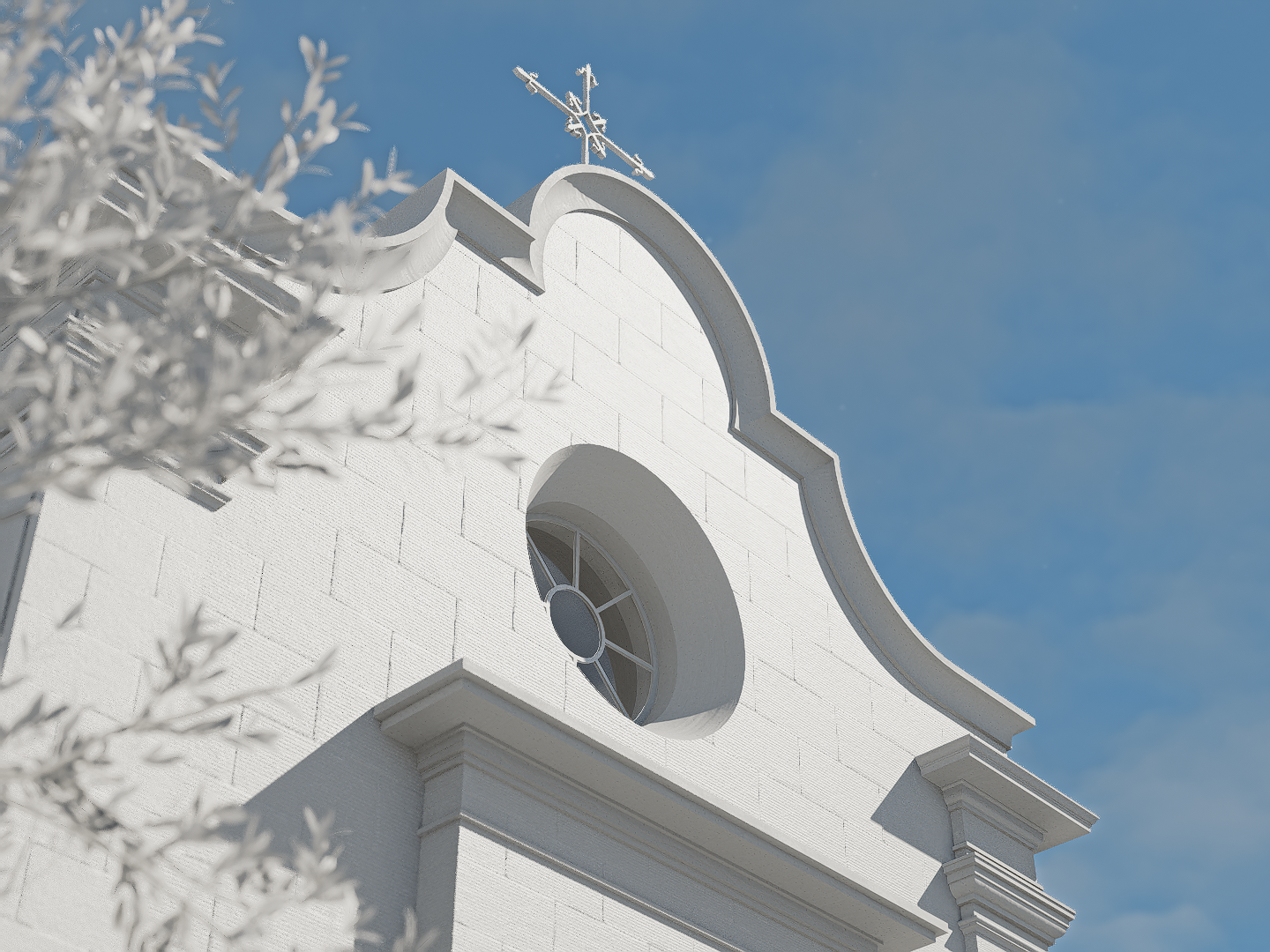
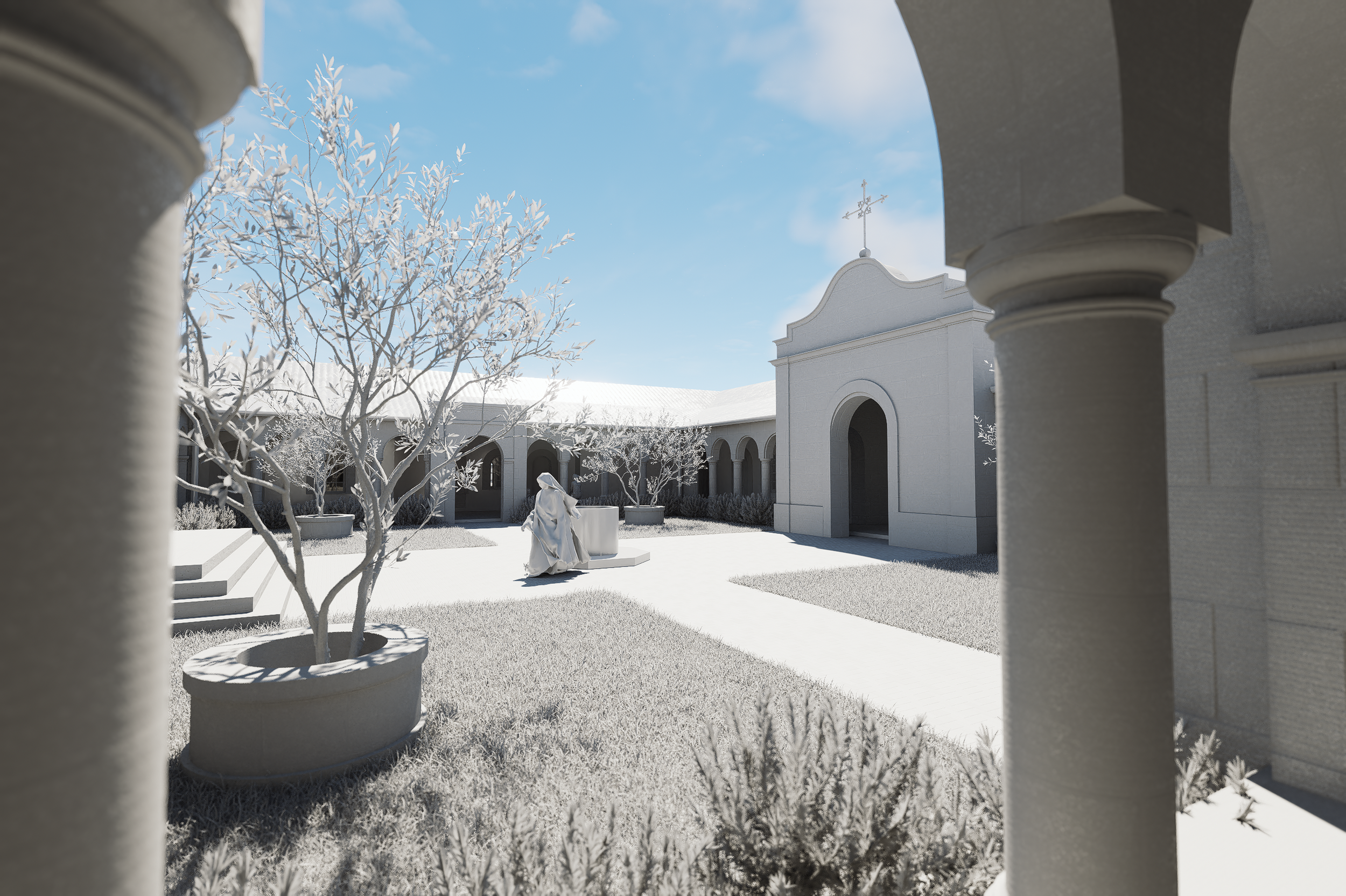
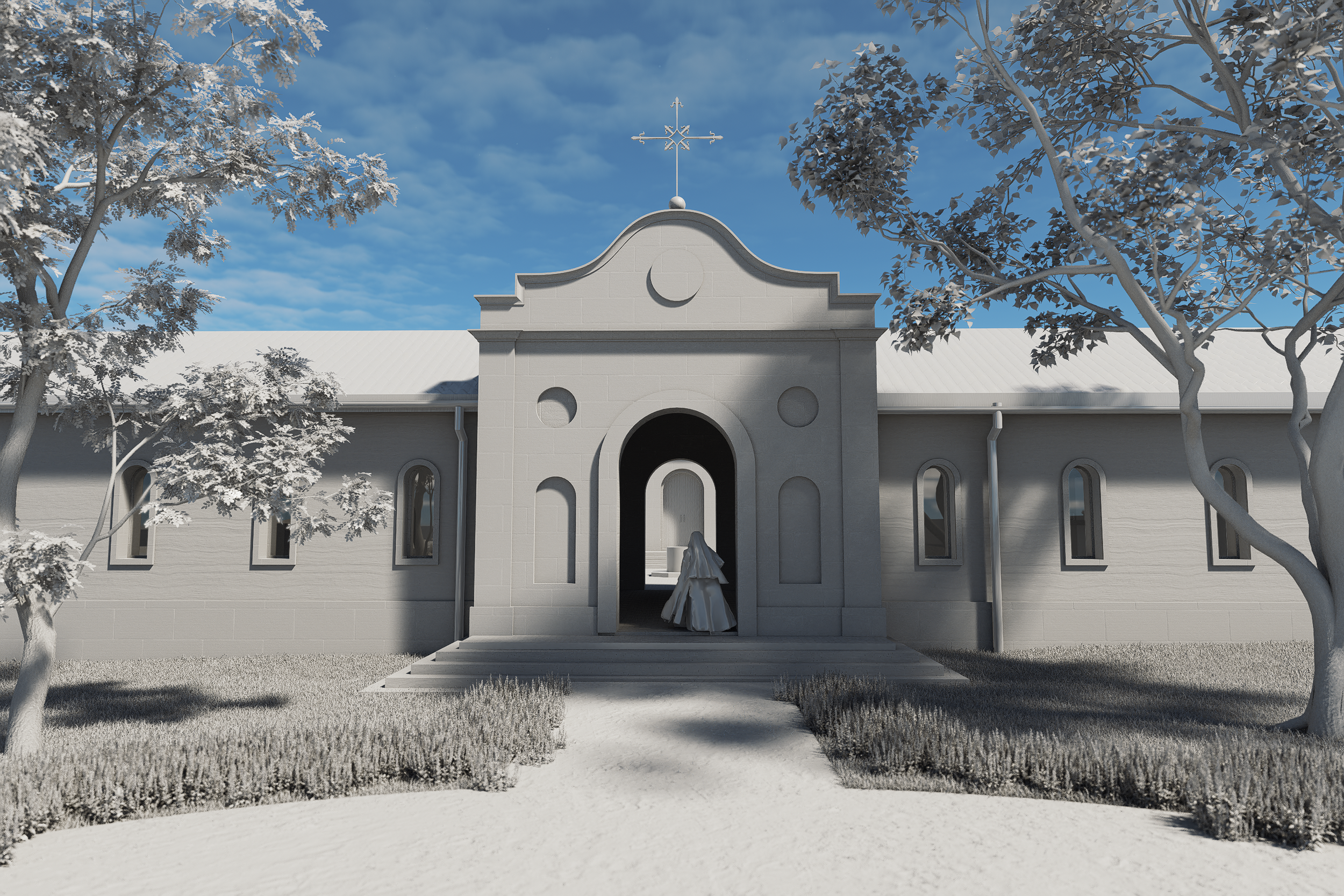
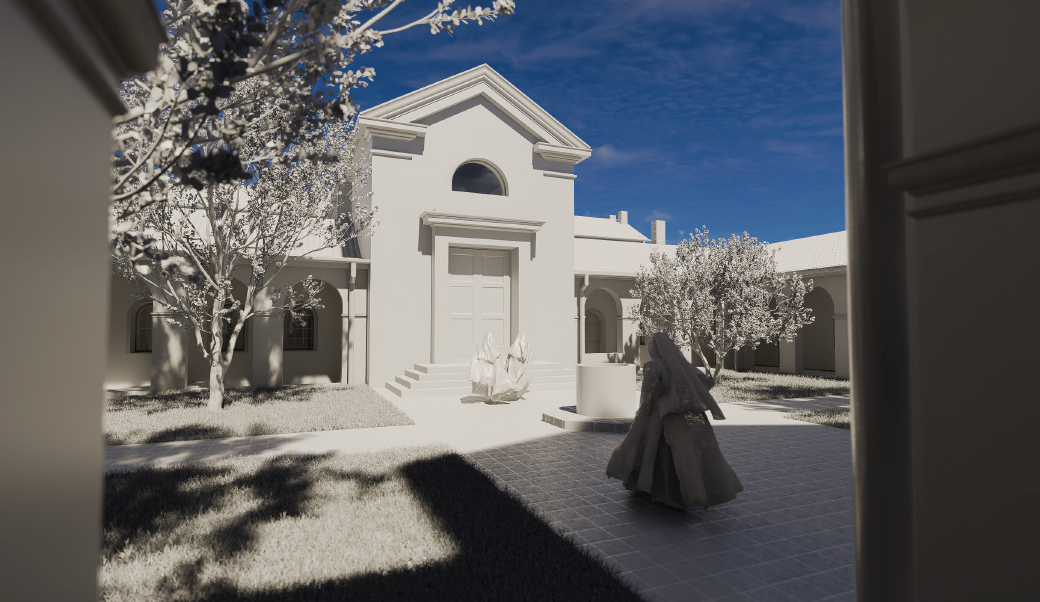
Monastery plans & concept images

Light Studies
As the monastery will not rely on mechanical heating and cooling systems, it is imperative that all the buildings naturally regulate indoor temperature. This has been achieved, in part, by the strategic design of windows within the monastery buildings, in addition to the thoughtful orientation of each building (northern, southern, eastern or western facing). With these factors in mind, and by taking into account the location of the sun during the day, optimum indoor temperature levels can be achieved throughout the year.
The following light studies show how this strategic design impacts on indoor light exposure, and therefore heat levels, during summer and winter.
Light study 1- Chapel Nave during Summer and Winter
Light study 2- cell during Summer and Winter
HOW TO SUPPORT THE PROJECT
The nuns at the Carmel of Elijah are immensely grateful for all the generous donations and prayerful support they have received since their foundation in 2019. This support has not only made it possible for them to live their contemplative lives, but to embark on the mission of building a new monastery.
A large proportion of the planned Monastery is still unfunded.
If you are interested in being a part of the construction of the new monastery, there are many ways to offer support.
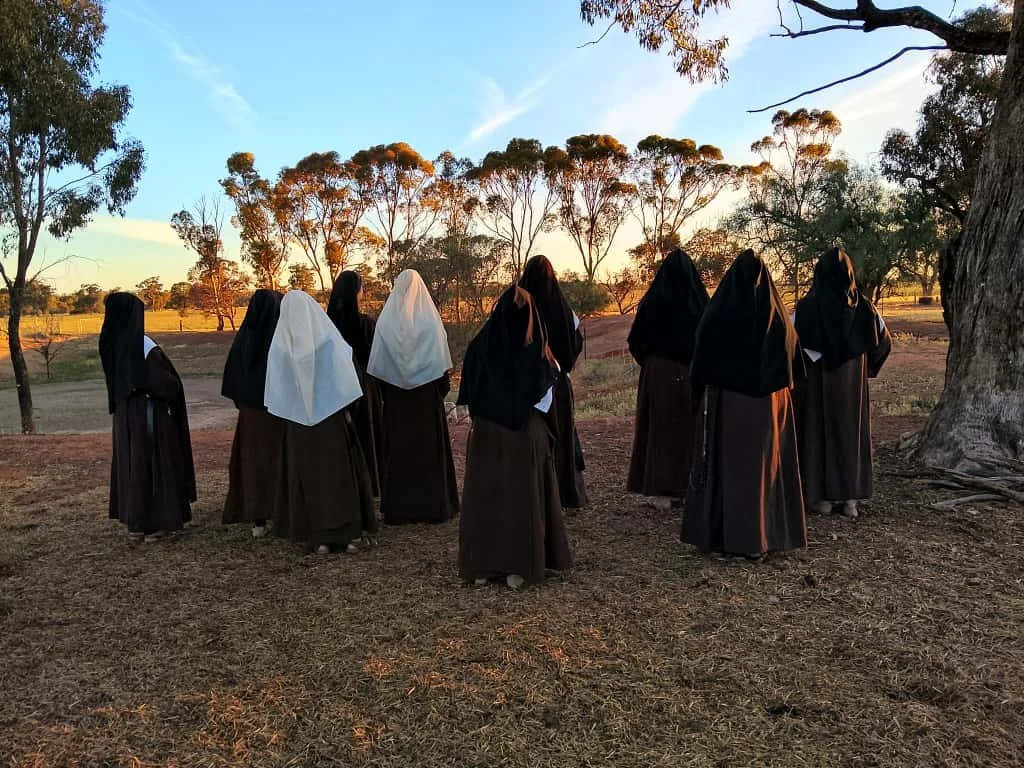
pRAYER
This is the most important source of support. Please continue to keep the Carmel and the construction of the new monastery in your prayers.
SHARE THE PROJECT
Please spread the word about the new monastery, especially to those who may be interested in supporting such an endeavour.
Share links to this webpage and to the Carmel’s social media pages, which are linked at the bottom of this website.
Donate
Any donation, whether large or small, will be gratefully received. Visit the donate page to find out how you can contribute to the Sisters’ building project.
The Sisters are particularly grateful to several one-off benefactors whose crucial contributions have allowed them to incur the significant costs of engaging consultants to complete the design work of the monastery to this point. If you are interested in committing to a significant pledge, please contact the Carmel.

Share THE SISTERS’ project BROCHURE
Copies of the Sisters’ building project brochure are available to any friends of the Carmel interested in spreading the word. To request printed brochures to be sent to you, please contact the Carmel.
For those who wish to self-print, the brochure is available in either full colour or reduced colour. A full colour brochure with crop lines and bleed is also available for those who wish to print these brochures professionally.
STAY UPDATED
If you are interested in staying up to date with the construction project, updates will be posted on this page and on the News page.
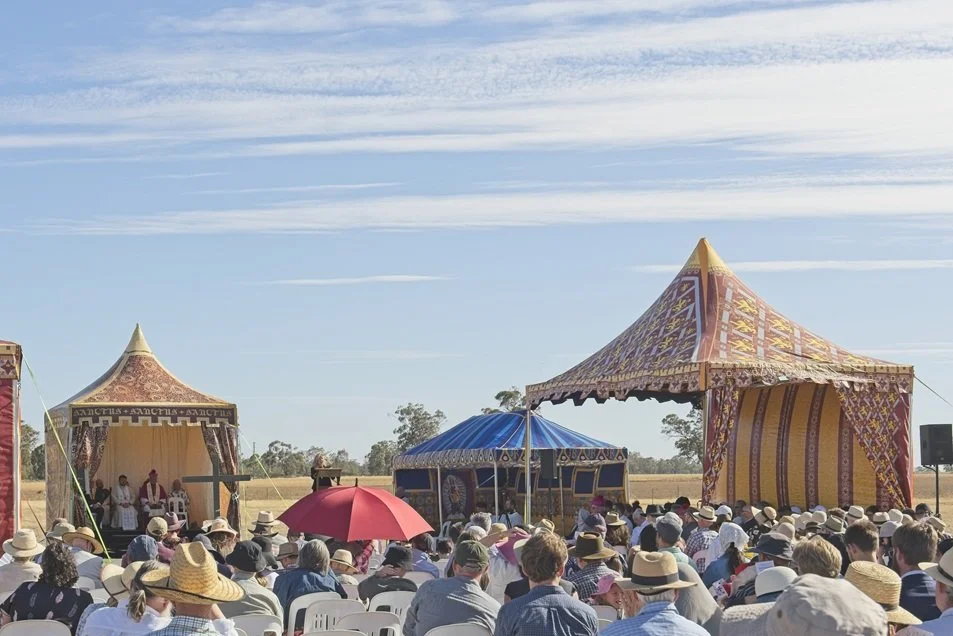
Groundbreaking Ceremony- Jan 10 2026
For information about the Sisters’ Groundbreaking Ceremony in January 2026, and to view photos of the event, visit the update on the News page.